Why Your Reading Format Matters
The format you choose to read is not neutral. It shapes how you focus, how deeply you understand, and how much you remember.
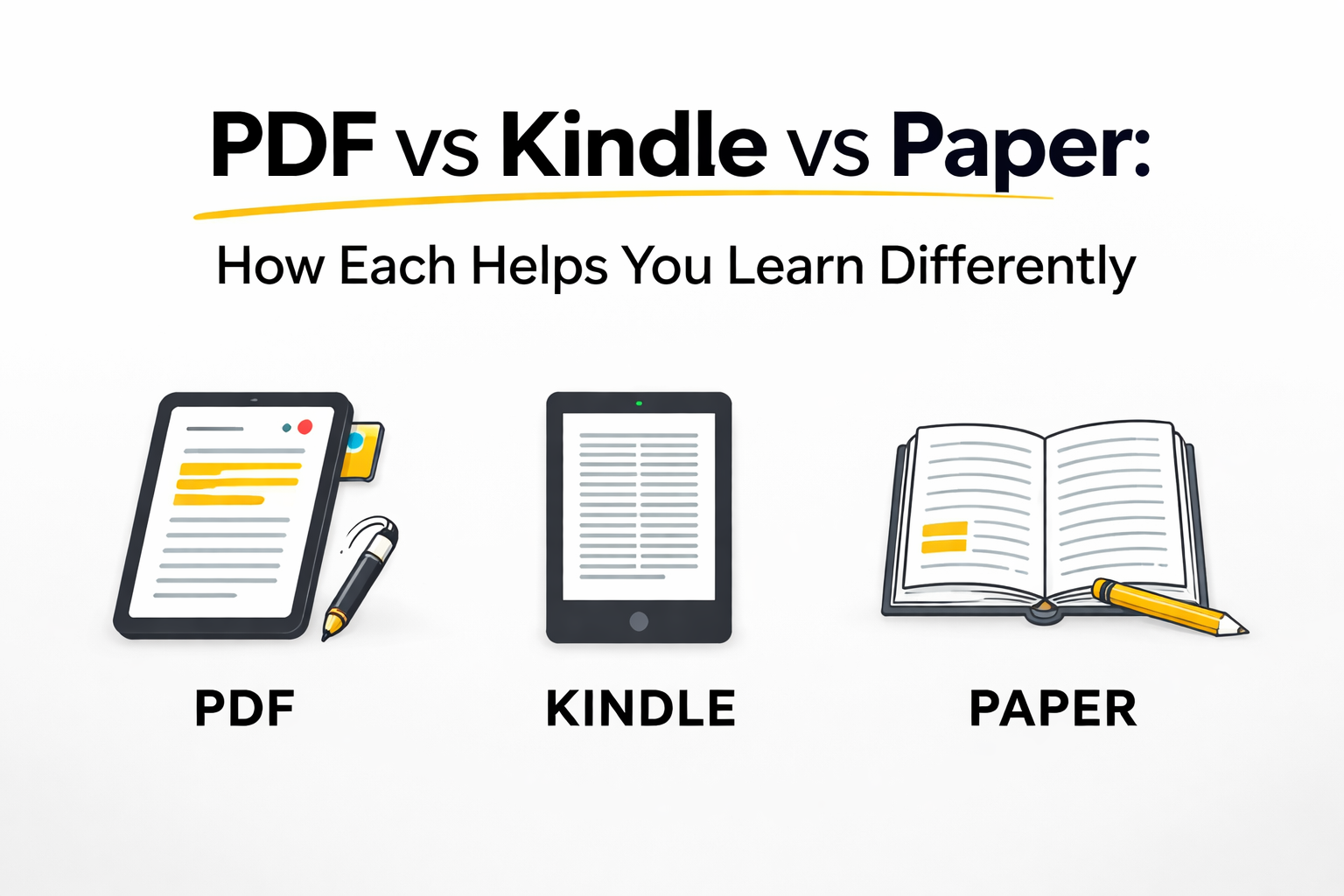
Research shows that reading on screens often leads to faster but more superficial processing, while print supports deeper comprehension. This means your choice between PDF, e-reader, or paper directly affects your learning outcomes (Delgado et al., 2018).
PDF Reading: Best for Active Learning
PDFs are the most powerful format for learning when you actively interact with them.
Research on note-taking suggests that putting ideas into your own words, rather than copying them verbatim, helps learning (Mueller & Oppenheimer, 2014). Highlighting pays off when you go back and work with what you marked.
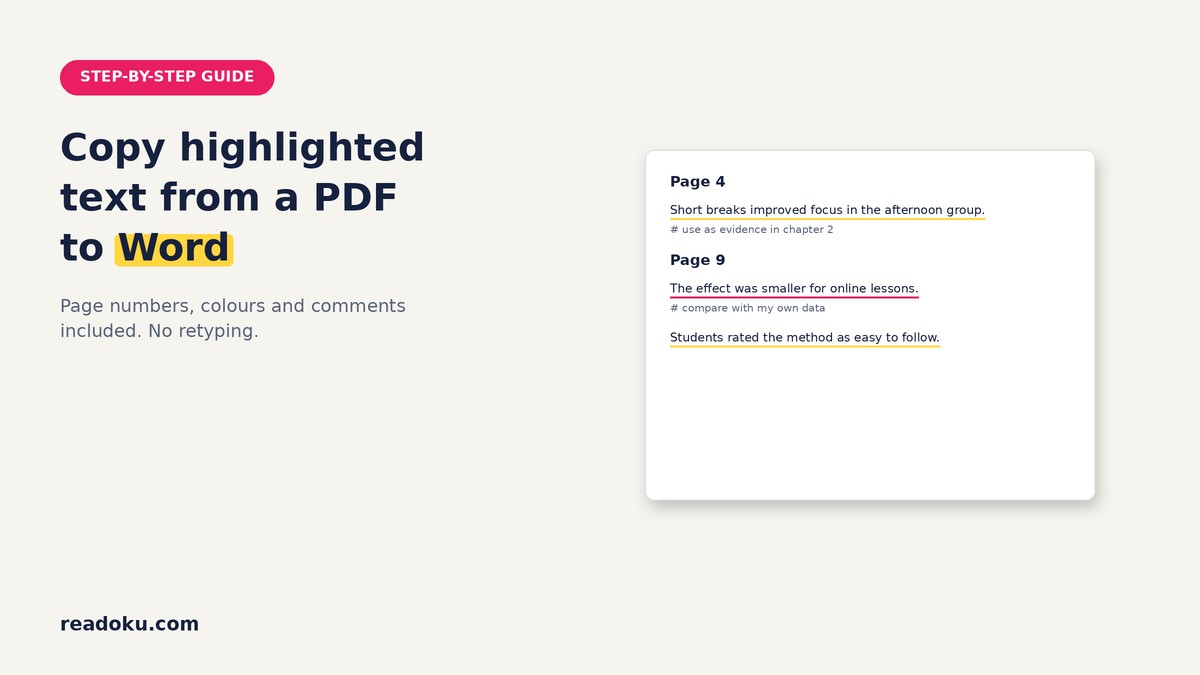
PDFs enable this kind of structured interaction. You can highlight, comment, and revisit content easily. Unlike passive reading, this turns reading into a process of building knowledge.
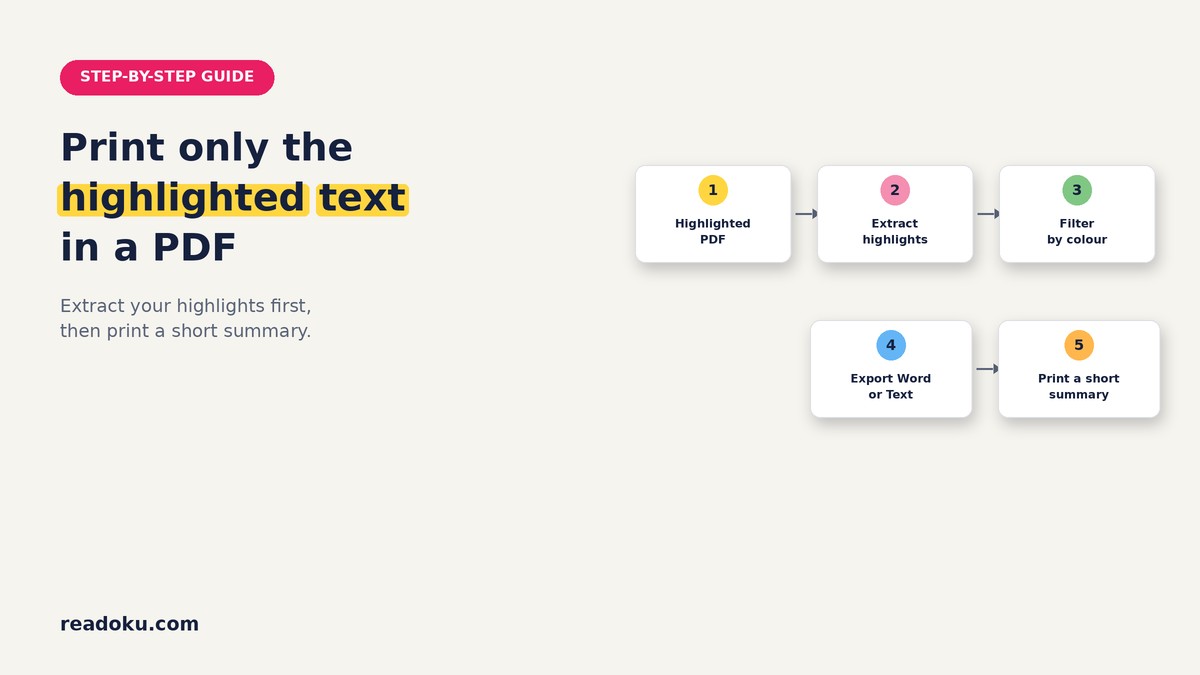
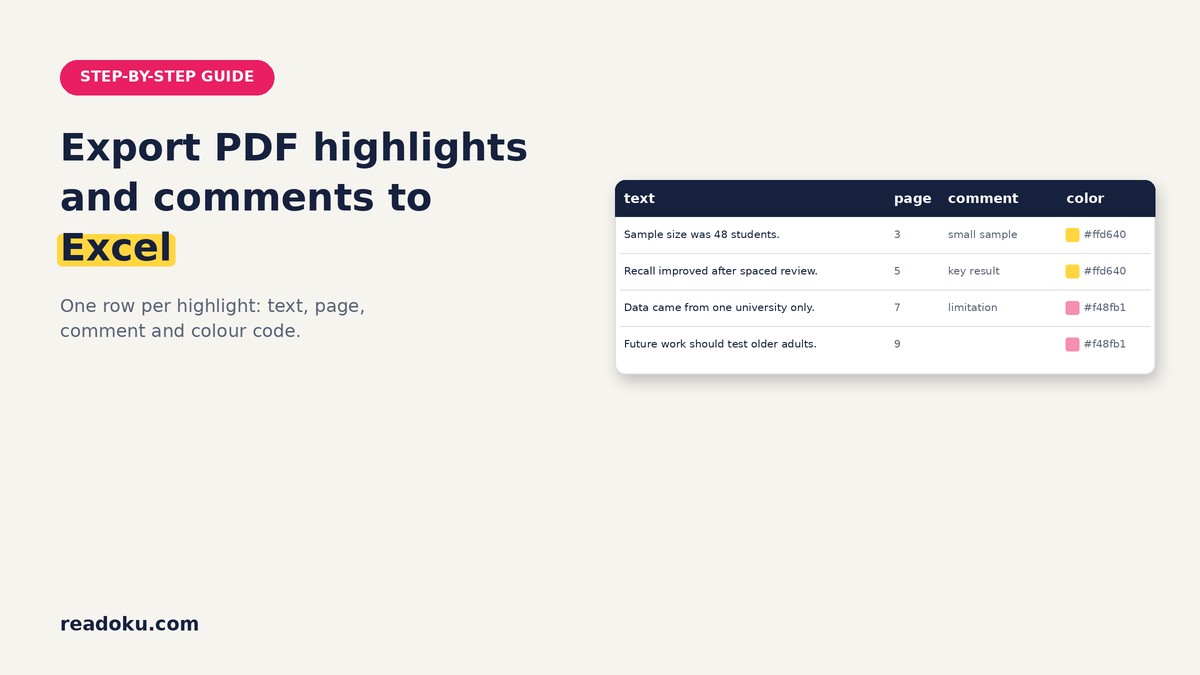
This is where tools like Readoku become important. Instead of leaving highlights scattered across documents, you can extract and organize them, making your reading reusable.
E-readers: Built for Uninterrupted Reading
E-readers are designed for uninterrupted reading.
They reduce distractions compared to phones or laptops, which helps maintain reading flow. This makes them effective for finishing books and building consistent reading habits.
However, research suggests that digital reading environments can encourage skimming and reduce deep processing if readers are not actively engaging with the text (Delgado et al., 2018).
An e-reader works best when your goal is to read continuously rather than analyze or extract knowledge.
Paper Books: Best for Deep Understanding
Paper books remain the strongest format for deep comprehension.
Experimental studies show that readers of printed texts perform better in understanding complex material compared to those reading on screens. Physical books support spatial memory, meaning readers remember where information is located within the text (Mangen et al., 2013).
Paper also slows down reading. This reduced speed encourages reflection, which is essential for critical thinking and long-term retention.
The limitation is that paper is difficult to search, organize, or reuse at scale.
The Smart Way to Read Today
The most effective approach is not choosing one format, but using each intentionally.
Paper is ideal when you need to fully understand a concept. An e-reader is useful when you want to read consistently without distractions. PDFs are the strongest format for studying, especially when combined with tools that allow you to extract and organize insights.
Final Thought
Reading more does not automatically mean learning more.
What matters is how you interact with what you read, how you structure it, and whether you can return to it later.
That is the difference between passive reading and real learning. Tools like Readoku help close that gap by turning reading into something you can use, not just consume.
Make PDF Reading Work for Deep Learning
Use the Readoku PDF Highlight Extractor → to extract, color-code, and review all your PDF highlights and annotations in one place. Related reading: Reading with AI: Is It Good or Bad for Readers and Researchers? and Why Most People Highlight Wrong.