1. Choose a Dedicated Reading Spot
Your brain loves associations. When you use a specific place only for reading — a corner of your room, a café table, a park bench — your brain starts to recognize that space as a cue for focus.
✅ What to do:
- Select one spot and use it only for reading
- Avoid multitasking there (no scrolling, no phone calls)
- The more consistently you use it, the stronger the mental link
2. Engage Your Senses
Using your senses helps anchor your mind to the present moment. This is one of the most powerful — yet underrated — ways to boost focus.
✅ What to do:
- Smell: Use a specific perfume, essential oil (lavender, rosemary, peppermint), or scented candle only during reading
- Sound: Play instrumental music without lyrics — lo-fi, classical, nature sounds, or even binaural beats work best
- Touch: Read while using a cozy blanket or wearing a soft sweater — something familiar that signals comfort and focus
When you repeatedly use the same sensory inputs while reading, your brain begins to associate those cues with concentration.
3. Set a Clear Purpose
Reading without a goal often leads to drifting thoughts. Knowing why you're reading keeps your brain on track.
✅ What to do:
- Define your purpose before you start. Example: “Understand this chapter’s argument” or “Find three insights for my project”
- Write it down or say it aloud to anchor your intention
4. Use the Pomodoro Technique
Attention spans aren’t infinite. Structured reading sessions improve both focus and endurance.
✅ What to do:
- Read for 25 minutes, then take a 5-minute break
- After 4 sessions, take a longer 15–30 minute break
- Use breaks to move, hydrate, or rest your eyes (not scroll your phone)
5. Annotate and Interact With the Text
Active reading keeps the mind engaged, making distractions less likely.
✅ What to do:
- Highlight or underline key points
- Jot down questions or summaries in the margins
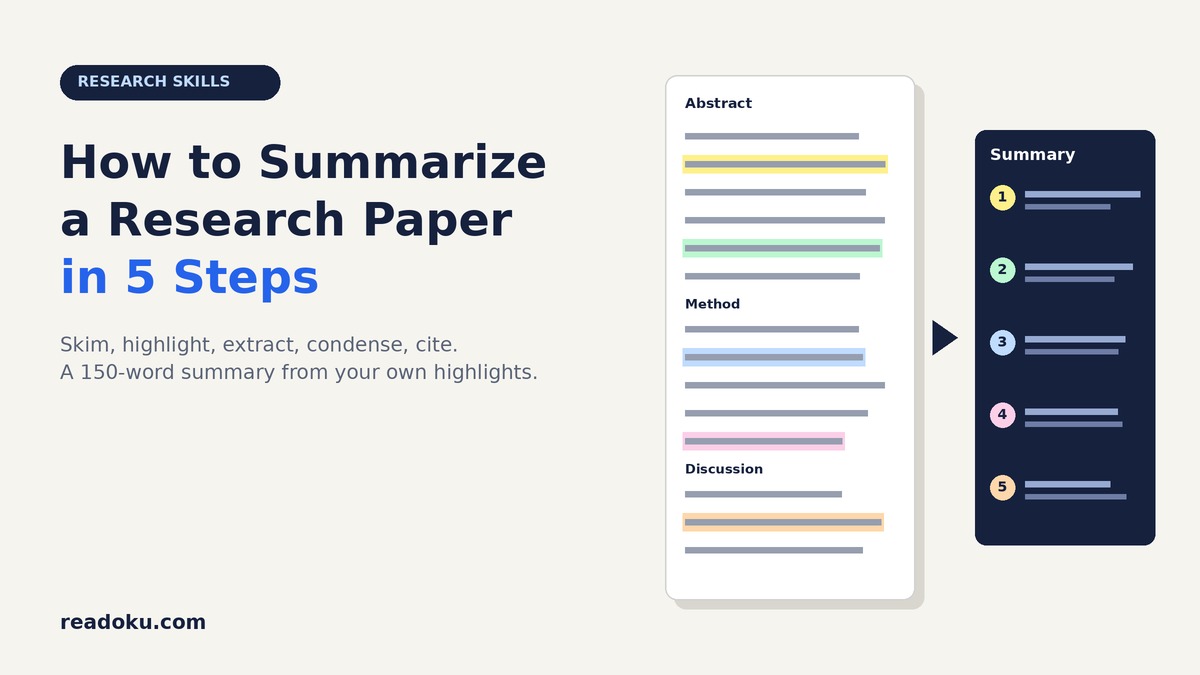
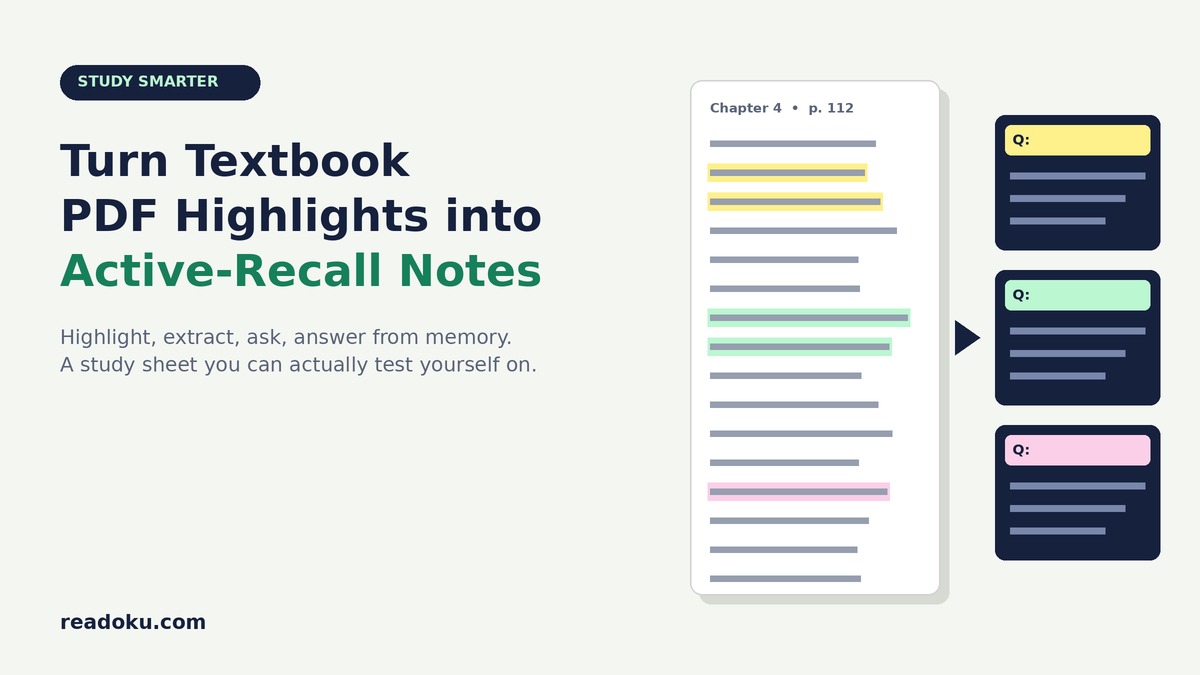
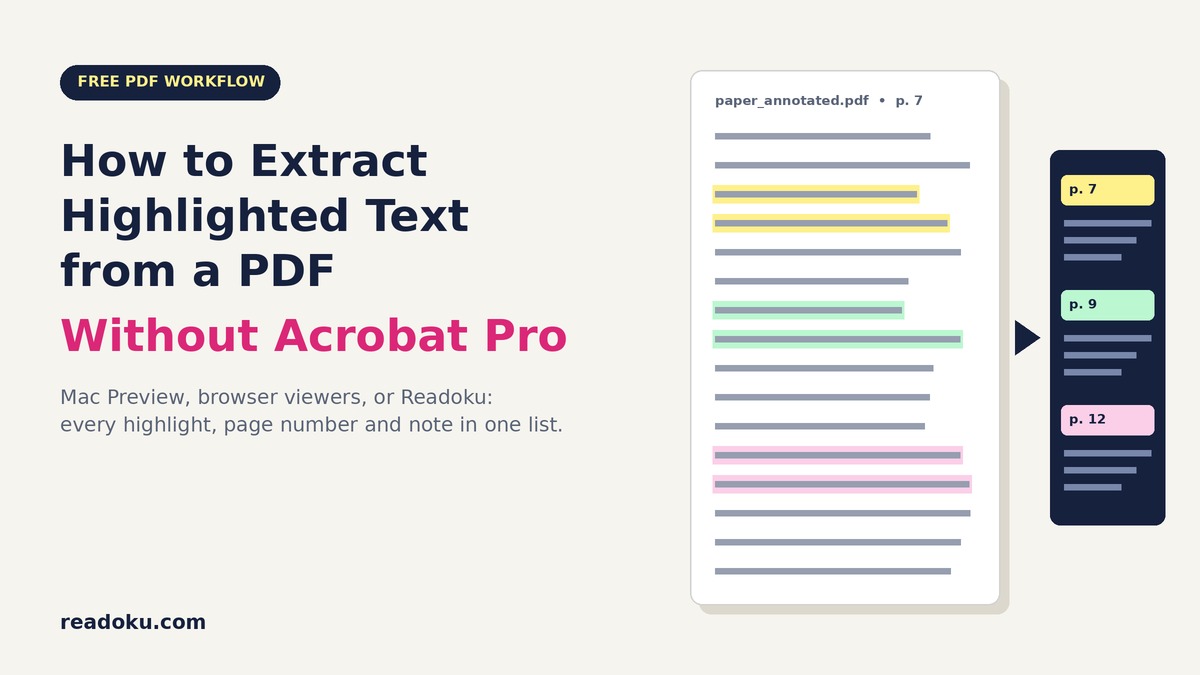
- Use tools like Readoku to color-code and organize PDF highlights
6. Use Rituals to Start and End Reading
Rituals help your brain shift from distraction mode to focus mode.
✅ What to do:
- Begin each reading session with a cue: play the same music, light a candle, or brew a specific tea
- End each session with a small review or by closing your notebook
Over time, these rituals create mental patterns that make reading easier to start and sustain.
7. Fuel Your Brain
Lack of energy = lack of focus. Your body and mind are connected.
✅ What to do:
- Read at times when your energy is naturally higher — morning or early afternoon for most people
- Have a light snack and water nearby
- Avoid heavy meals or sugary snacks right before reading
8. Train Your Focus Muscle
Concentration improves with practice — start small, stay consistent.
✅ What to do:
- Begin with short, manageable sessions (15–20 minutes)
- Gradually increase your reading time each week
- Track your progress and celebrate consistency
9. Give Yourself Small Treats
Rewards build habits. When your brain knows there’s something to look forward to, it’s more motivated to stay focused.
✅ What to do:
- Tie the reward to goals, not time. For example:
➤ “If I finish this chapter, I’ll have a snack.”
➤ “Once I read 3 articles, I’ll watch an episode of my show.” - Avoid vague time-based rewards like “If I read for an hour…” — they’re less tangible
Treats can be anything that feels good to you — food, a walk, a nap, a fun outing, a night out — whatever sparks joy.
Also, learn what motivates you:
- Some people need a treat before starting to get into the mood
- Others prefer a reward after finishing to celebrate effort
Both are valid — choose what works best for you.
🪷 Final Thoughts: Make Reading a Ritual, Not a Chore
Concentration isn’t about forcing your brain — it’s about training it.
With the right location, sensory cues, rewarding habits, and clear goals, reading can become one of the most relaxing and rewarding parts of your day.
✨ Want to stay focused and organized?
Use tools like Readoku to collect, color-code, and revisit your highlights easily.
It turns your reading into an ongoing learning system.