Many students flagged for plagiarism never meant to copy anyone. They kept a source open next to their draft, swapped a few words and flipped a sentence around. The result still follows the original sentence by sentence.
Writing researchers have a name for this: patchwriting. Rebecca Moore Howard described it in College English (1995) as copying from a source and then deleting words, changing grammar or plugging in synonyms. Diane Pecorari later compared the texts of 17 postgraduate second-language writers with their sources and found plenty of unattributed source language, yet interviews pointed to no intention to deceive (Journal of Second Language Writing, 2003). Her conclusion: students need to be taught how to use sources, not just warned.
Here is a practical method built around one habit: keep the source's exact words and your own words strictly apart.
What a good paraphrase actually is
A paraphrase restates one specific idea from a source in your own words and your own sentence structure, and it still gets a citation. That last part matters. Paraphrasing changes the wording, not the ownership of the idea.
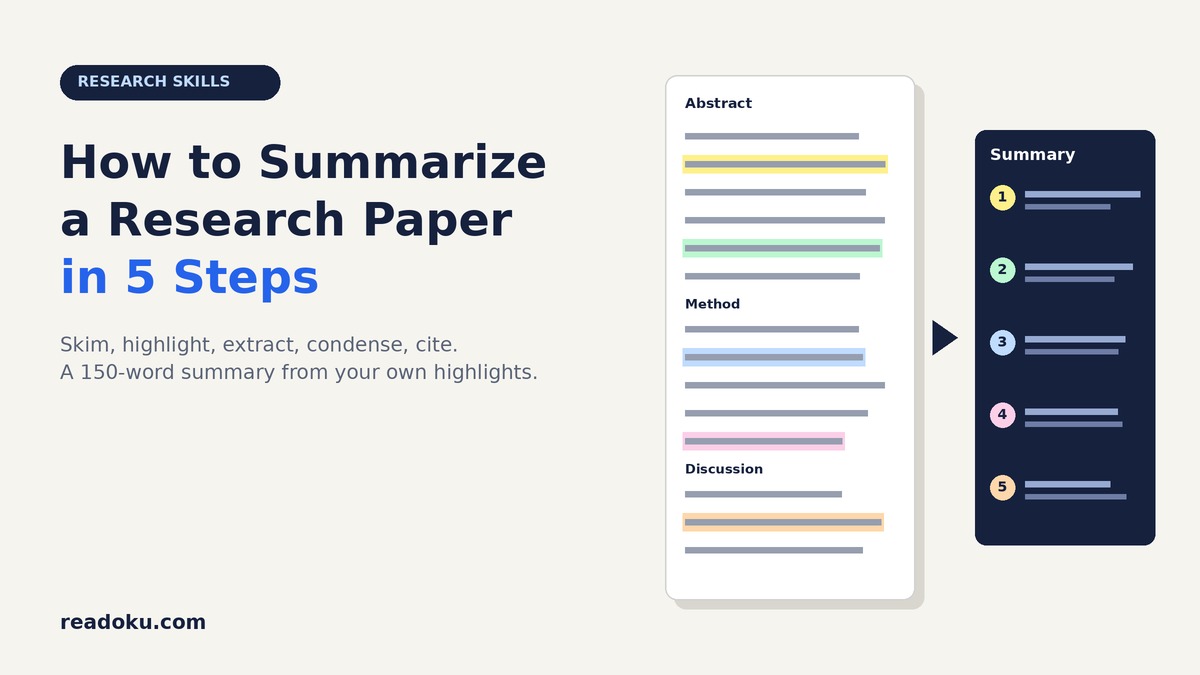
A paraphrase is usually about the same length as the original passage. If you are condensing a whole paper, you are summarizing instead (see our guide on how to summarize a research paper in 5 steps).
Three common mistakes:
- Synonym swapping. Replacing "significant" with "important" keeps the author's structure, which is exactly what patchwriting is.
- Writing with the source in view. Your eyes keep pulling the original phrasing back into your sentence.
- Losing track of what was a quote. Weeks later, you can't tell whether a line in your notes is yours or the author's.
The 5-step paraphrasing method
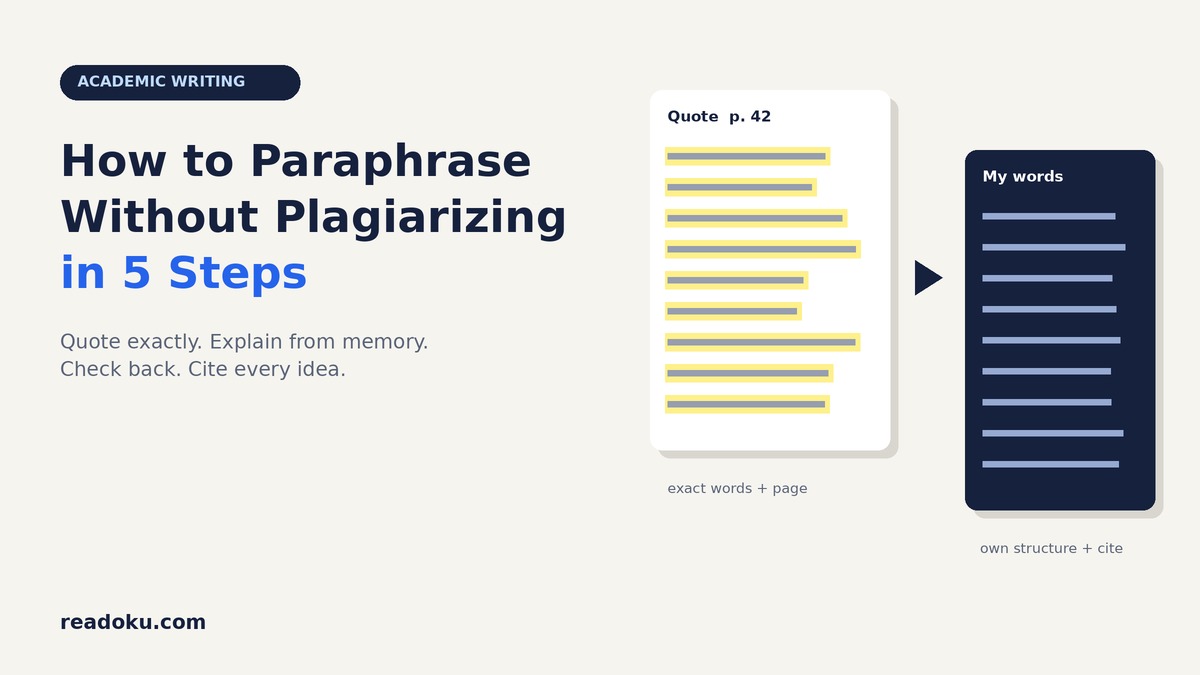
1. Capture the exact words, with a page number
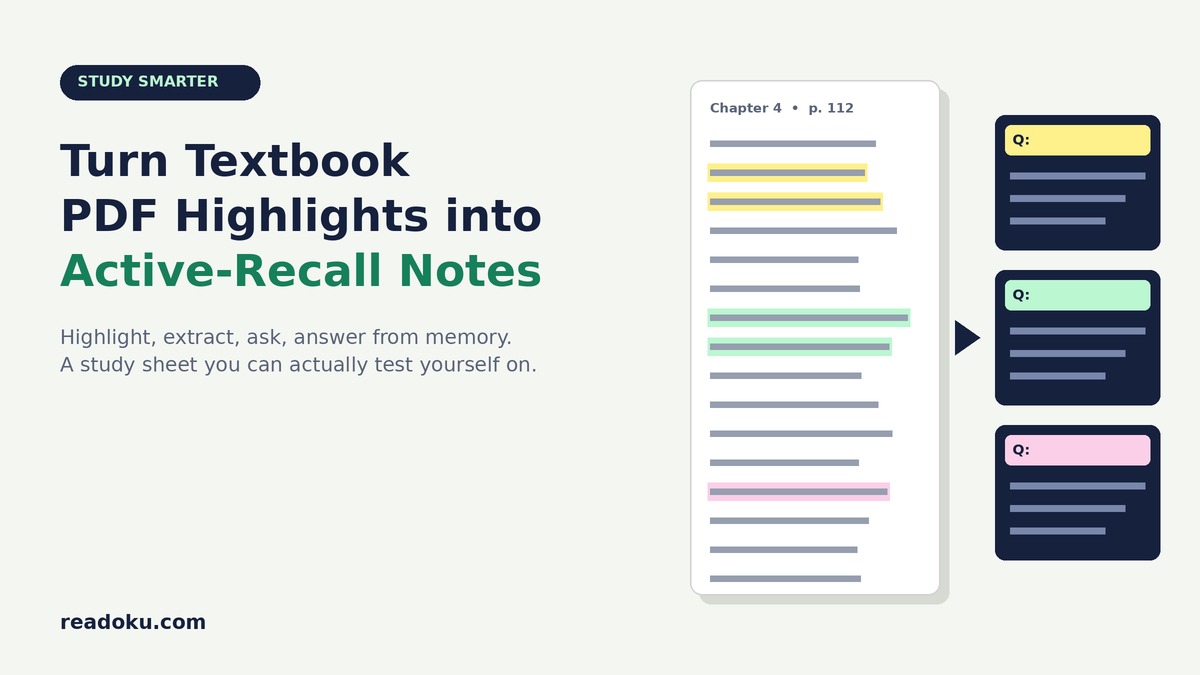
When you read, highlight the passage you might use. Treat every highlight as a verbatim quote that belongs to the author, and record the page number at the same moment. Page numbers are what let you (and your reader) check the original later. If you need a refresher on formatting, see our APA 7th edition in-text citation guide.
2. Keep quotes and notes in separate places
This is the core habit. Put the extracted quotes in one place and your own thoughts in another, for example two columns, or quotes in a block and your notes underneath. Never edit a quote into a note. If it came from the source, it stays marked as source text.
3. Explain it from memory
Read the passage until you understand it. Then close the PDF or cover the quote and write the idea down as if explaining it to a classmate. Writing from understanding, not from the page, is what breaks the original sentence structure.
4. Check back against the original
Now open the quote again and compare. Is the meaning still accurate? Did a distinctive phrase sneak back in? If a term has no good alternative (a technical concept, a defined variable), keep it, or put the short phrase in quotation marks.
5. Cite it, even though the words are yours
Add the in-text citation right away: author, year and, where your style requires it, the page. A paraphrase without a citation is still presenting someone else's idea as your own.
A worked example
Original (fictional example passage): "Students who space their study sessions over several weeks tend to retain information longer than students who study the same material in a single intensive session."
Patchwriting (avoid): Learners who spread their study sessions across several weeks usually remember material longer than learners who study the same content in one intensive session.
The words changed, but the skeleton is identical.
Paraphrase (better): Cramming everything into one long session seems to be less effective for long-term memory than revisiting the same material in shorter sessions over a period of weeks (Author, Year, p. X).
The idea is the same, the structure and wording are new, and the source is credited.
When to quote instead of paraphrase
Paraphrase when the idea matters more than the wording. Quote when the exact wording is the point: a definition, a striking formulation, or a phrase you are going to analyze. Keep quotes short and always mark them clearly.
In Germany, the right to quote is set out in § 51 of the Urheberrechtsgesetz, and your university adds its own rules on source use in its Prüfungsordnung and style guidelines. This article is general study advice, not legal advice, so check your institution's rules and ask your supervisor when in doubt.
How Readoku fits into this workflow
The hardest part of the method is step 2: keeping exact quotes cleanly separated from your own notes over weeks of reading. That is where Readoku helps.
- Highlight while you read your PDF as usual.
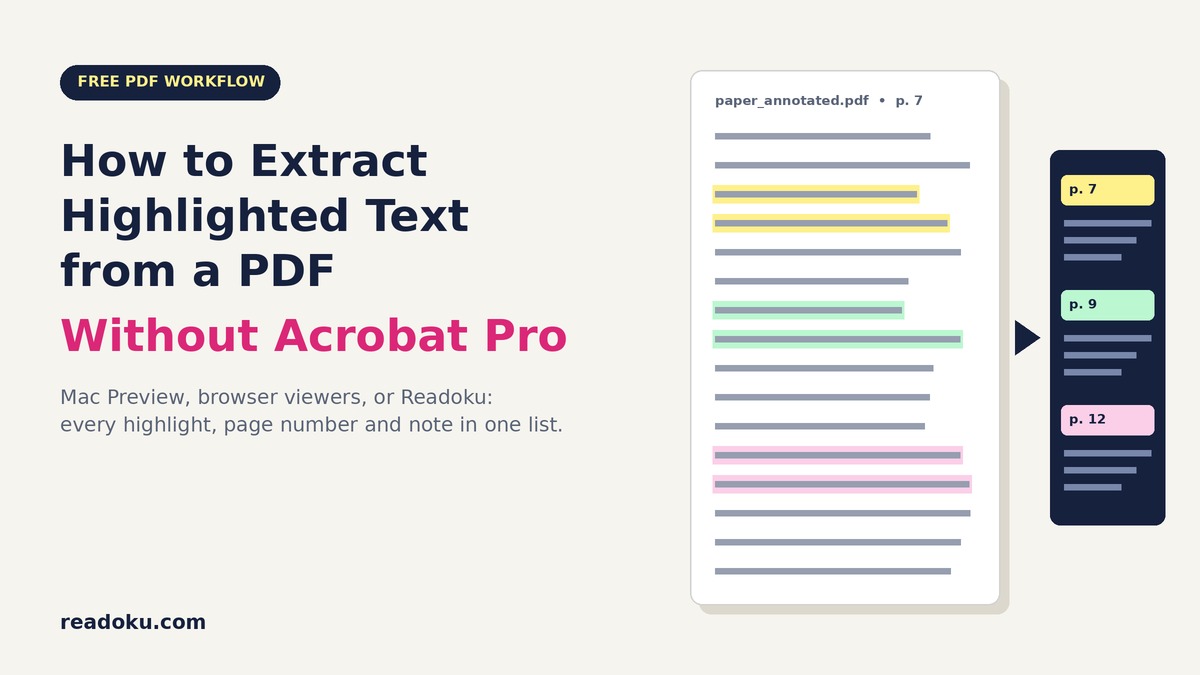
- Extract your highlights with Readoku. Each highlight comes out as the exact text you marked, with its page number, so you have a clean list of verbatim quotes.
- Write your paraphrases next to them, from memory, then check each one back against the extracted quote.
- Keep the source attached. With in-text citations in Readoku, source information stays with your highlights, so citing your paraphrase is quick.
Because the original wording is always one glance away, step 4 (checking back) becomes a habit instead of a chore. If you want a system for sorting highlights by purpose before you write, try the 4-color PDF highlighting system.
Paraphrasing well is a skill you build, not a trick. Start with clean quotes and page numbers, and the rest gets much easier.
Ready to try it on your next source? Extract your PDF highlights with page numbers in Readoku and start paraphrasing from a clean list of quotes.